
The Kinks
The Kinks were an English rock band formed in London in 1962. The original line-up consisted of brothers Ray Davies (lead vocals, rhythm guitar) and Dave Davies (lead guitar, vocals), Pete Quaife (bass), and Mick Avory (drums, percussion). Emerging during the British rhythm and blues and Merseybeat era, they achieved their first major success with the Ray Davies-written single "You Really Got Me" in 1964. The song reached number one in the United Kingdom and entered the Top 10 in the United States. Read more on Last.fm
The Kinks were an English rock band formed in London in 1962. The original line-up consisted of brothers Ray Davies (lead vocals, rhythm guitar) and Dave Davies (lead guitar, vocals), Pete Quaife (bass), and Mick Avory (drums, percussion). Emerging during the British rhythm and blues and Merseybeat era, they achieved their first major success with the Ray Davies-written single "You Really Got Me" in 1964. The song reached number one in the United Kingdom and entered the Top 10 in the United States. Other early hit singles included "All Day and All of the Night", "Tired of Waiting for You", "Set Me Free", "See My Friends", and "Till the End of the Day". The band were associated with the British Invasion of the United States, although a dispute during their 1965 American tour resulted in a ban on further touring there for several years. The band's early music drew heavily from American rhythm and blues and rock and roll. From the mid-1960s onward, their style increasingly incorporated elements of British music hall, folk, and country music. Beginning with the "Kwyet Kinks" EP in 1965, they became known for songs reflecting aspects of English culture and everyday life, often characterised by Ray Davies's observational and satirical lyrics. This approach was developed on albums such as "Face to Face" (1966), "Something Else by the Kinks" (1967), "The Kinks Are the Village Green Preservation Society" (1968), "Arthur (Or the Decline and Fall of the British Empire)" (1969), "Lola Versus Powerman and the Moneygoround, Part One" (1970), and "Muswell Hillbillies" (1971). Notable singles from this period included "Dedicated Follower of Fashion", "Sunny Afternoon", "Dead End Street", "Waterloo Sunset", "Autumn Almanac", "Days", and "Lola". Following a decline in commercial success during the mid-1970s, the band returned to prominence with albums such as "Sleepwalker" (1977), "Misfits" (1978), "Low Budget" (1979), "Give the People What They Want" (1981), and "State of Confusion" (1983), which included the successful US single "Come Dancing". Ray and Dave Davies remained members throughout the band's existence. Pete Quaife temporarily left in 1966 and was replaced by John Dalton before returning later that year. Quaife departed permanently in 1969, with Dalton again taking over on bass. Keyboardist John Gosling joined in 1970 and remained until 1976. Following several personnel changes, the line-up stabilised in 1979 with Ray Davies, Dave Davies, Mick Avory, Jim Rodford, and Ian Gibbons. Avory left in 1984. The band gave its final public performance in 1996 and formally disbanded in 1997, with creative disagreements between the Davies brothers frequently cited as a contributing factor. The Kinks are widely regarded as one of the most influential rock bands of the 1960s. They achieved seventeen Top 20 singles and five Top 10 albums in the United Kingdom, while five of their singles reached the Top 10 of the US Billboard Hot 100. Nine of their albums entered the Top 40 of the US Billboard 200. Four albums received Gold certification from the Recording Industry Association of America, and worldwide record sales have been estimated at more than 50 million copies. Their honors include the Ivor Novello Award for Outstanding Service to British Music. The original four members were inducted into the Rock and Roll Hall of Fame in 1990 and the UK Music Hall of Fame in 2005. Their songs were later recorded by artists including Van Halen, the Jam, the Knack, the Pretenders, Green Day, Queens of the Stone Age, and the Romantics. During the 1990s, Britpop groups such as Blur and Oasis cited the Kinks as an influence. Ray and Dave Davies grew up in North London and developed an interest in music through exposure to a variety of styles, including music hall, jazz, skiffle, and early rock and roll. While attending school, they formed a group with Pete Quaife that underwent several name changes before becoming the Ravens. The band worked with managers Grenville Collins, Robert Wace, and later Larry Page, while producer Shel Talmy helped secure a recording contract with Pye Records in 1964. Shortly before signing, drummer Mick Avory joined the group. The name "The Kinks" was adopted in 1964, although differing accounts exist regarding its origin. The band's first two singles, "Long Tall Sally" and "You Still Want Me", achieved little commercial success. Their breakthrough came with "You Really Got Me", released in August 1964. The song's distorted guitar riff, created by Dave Davies through modifications to his amplifier, became one of its defining features. The single reached number one in the United Kingdom and number seven in the United States. It was followed by further hits, including "All Day and All of the Night" and "Tired of Waiting for You". Their debut album, "Kinks", reached number four in the UK Albums Chart. During 1965, the band toured extensively, including visits to Australia, New Zealand, Asia, and the United States. Internal tensions occasionally surfaced, most notably during an on-stage altercation between Dave Davies and Mick Avory in Cardiff. Following their American tour, the American Federation of Musicians prohibited the band from performing in the United States for approximately four years. The exact reasons remain disputed, though accounts have linked the ban to conflicts involving the band during the tour. The single "See My Friends" reflected an interest in Indian musical influences following a stopover in India. Later releases, including "A Well Respected Man", "Dedicated Follower of Fashion", and material from "The Kink Kontroversy", marked a shift towards more observational and character-based songwriting. During this period, session keyboardist Nicky Hopkins became an important contributor to the band's recordings. The single "Sunny Afternoon" became one of the group's most successful releases in 1966. Around the same time, Ray Davies experienced physical and mental exhaustion resulting from touring, songwriting, and legal disputes. Following Pete Quaife's temporary departure after a car accident, John Dalton briefly replaced him. Albums such as "Face to Face" and singles including "Dead End Street" further developed the band's focus on social commentary and everyday life. In 1967, the Kinks released "Waterloo Sunset", which became one of their best-known songs. That year also saw the release of "Something Else by the Kinks", featuring "Death of a Clown", a successful solo single by Dave Davies recorded with the band. Although the group continued to produce critically regarded music, their commercial performance began to decline compared with earlier successes. By 1968, the band had reduced touring activity and concentrated on studio work. Singles such as "Wonderboy" achieved only modest chart success. The album "The Kinks Are the Village Green Preservation Society" was released in late 1968. Although sales were initially disappointing, it later came to be regarded as one of the band's most significant works and developed a strong reputation among critics and listeners. Pete Quaife left permanently in 1969 and was replaced by John Dalton. Following the lifting of the American touring ban, the band returned to the United States. The concept album "Arthur (Or the Decline and Fall of the British Empire)" explored themes including family, emigration, and post-war Britain. Although critically well received, the accompanying US tour achieved mixed results. Keyboardist John Gosling joined in 1970. The single "Lola" became an international hit and restored the band's commercial visibility. Its parent album, "Lola Versus Powerman and the Moneygoround, Part One", examined aspects of the music industry. After the soundtrack album "Percy" (1971), the group signed with RCA Records and established their own recording facility, Konk Studios. Albums such as "Muswell Hillbillies" and "Everybody's in Show-Biz" combined rock music with country, music hall, and theatrical influences. Between 1973 and 1975, the Kinks adopted a more theatrical approach centred on concept albums and stage productions. Releases including "Preservation Act 1", "Preservation Act 2", "The Kinks Present a Soap Opera", and "Schoolboys in Disgrace" featured elaborate narratives and expanded live performances. During this period, Ray Davies experienced personal difficulties, including depression and the breakdown of his marriage, which affected both the band's activities and public reception. After signing with Arista Records in 1976, the band returned to a more straightforward rock sound. Albums such as "Sleepwalker", "Misfits", and "Low Budget" achieved renewed commercial success, particularly in the United States. New members included Andy Pyle, Jim Rodford, Gordon John Edwards, and Ian Gibbons. Covers of Kinks songs by artists such as Van Halen[7artist], the Pretenders, and the Jam contributed to renewed interest in the group's catalogue. The albums "Give the People What They Want" and "State of Confusion" were among the band's most commercially successful releases in the United States. "Come Dancing" became their largest US hit since the mid-1960s. During this period, the band performed large-scale arena concerts and festivals. However, tensions within the group persisted, leading to Mick Avory's departure in 1984. He was replaced by Bob Henrit, while Avory subsequently managed Konk Studios. Commercial fortunes declined during the second half of the 1980s. Albums such as "Think Visual" and "UK Jive" achieved limited chart success, and the band was eventually dropped by MCA Records. Despite their induction into the Rock and Roll Hall of Fame in 1990, their recording career continued to lose momentum. They later signed with Columbia Records and released the EP "Did Ya" and the album "Phobia", both of which achieved only modest commercial results. During the 1990s, the Kinks increasingly focused on live and retrospective projects. The live album "To the Bone" revisited material from throughout their career. Renewed interest generated by the Britpop movement brought additional attention to the band's influence, but this did not result in a sustained commercial revival. The group performed publicly for the last time in 1996 and formally ceased activity the following year. After the breakup, the members pursued solo projects. Ray Davies released several solo recordings and stage productions, while Dave Davies continued his solo career and published an autobiography. Former members John Gosling, John Dalton, and Mick Avory formed the touring group Kast Off Kinks in 1994. Discussions of a reunion occurred periodically, particularly during the 2000s and 2010s, but no full-scale reunion materialised. Dave Davies's recovery from a stroke in 2004 and ongoing differences between the Davies brothers were among the factors that complicated such plans. Several former members died in the years following the band's breakup. Pete Quaife died in 2010, Jim Rodford in 2018, Ian Gibbons in 2019, and John Gosling in 2023. Although reports in 2018 and 2019 suggested that Ray Davies, Dave Davies, and Mick Avory were working on new material, no reunion album was released. In later interviews, members indicated that discussions had taken place but that differing artistic approaches and practical considerations had prevented a full revival of the band. Full Wikipedia article: https://en.wikipedia.org/wiki/The_Kinks Studio albums Kinks (1964) Kinda Kinks (1965) The Kink Kontroversy (1965) Face to Face (1966) Something Else by the Kinks (1967) The Kinks Are the Village Green Preservation Society (1968) Arthur (Or the Decline and Fall of the British Empire) (1969) Lola Versus Powerman and the Moneygoround, Part One (1970) Percy (1971) Muswell Hillbillies (1971) Everybody's in Show-Biz (1972) Preservation Act 1 (1973) Preservation Act 2 (1974) Soap Opera (1975) Schoolboys in Disgrace (1975) Sleepwalker (1977) Misfits (1978) Low Budget (1979) Give the People What They Want (1981) State of Confusion (1983) Word of Mouth (1984) Think Visual (1986) UK Jive (1989) Phobia (1993) Read more on Last.fm. User-contributed text is available under the Creative Commons By-SA License; additional terms may apply.
-
Apeman
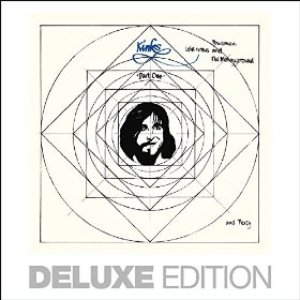
The KinksLola vs. the Powerman & the Money-Go-Round, Pt. 1(1970)
Ray Davies -
Sunny afternoon
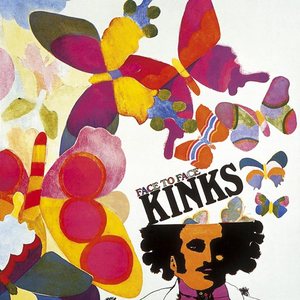
The KinksFace to face (1966)
Ray Davies